Air, Sea, and Land Freight Forwarding Services: Choosing the Right Mode
In today’s global market, picking the right freight forwarding services can have a direct effect on how well your business runs, how quickly your packages arrive, and how much they cost overall. Choosing between air, sea, and land transport is a strategic choice, not just a logistical one, whether you’re sending goods within your own country or to another country.
Depending on the type of cargo, how quickly you need it, and your budget, each mode of transportation has its own pros and cons. Businesses can make their supply chains work better and avoid extra costs or delays by knowing how these goods forwarding services work.
Let’s explore how to choose the right mode of freight forwarding for your business needs.
What Are Freight Forwarding Services?
Freight forwarding services help people move goods from one place to another using different types of transportation. A goods forwarder is a middleman between the shipper and the people who move the goods.
Core Functions Include:
- Cargo booking and transportation
- Documentation and customs clearance
- Warehousing and distribution
- Insurance and risk management
make sure that goods move smoothly across borders with as few problems as possible.
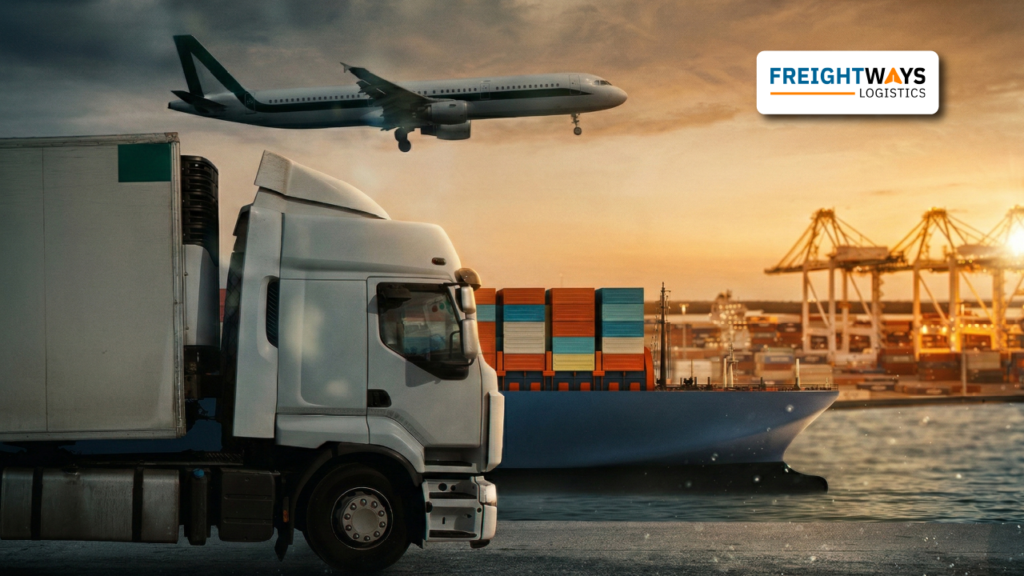
Understanding the Three Main Modes of Freight
There are many things to think about when choosing the best way to move your goods, like the cost, the type of cargo, and the time it will take to get there.
1. Air Freight Services
Air freight is the fastest method of transporting goods internationally.
Key Benefits:
- Quick delivery for urgent shipments
- High level of security
- Ideal for lightweight and high-value goods
Best For:
- Perishable items
- Electronics and pharmaceuticals
- Time-sensitive deliveries
However, air freight services are usually more expensive than other freight forwarding services.
2. Sea Freight Forwarding
Sea freight is widely used for large-volume shipments across international markets.
Advantages:
- Cost-effective for bulk cargo
- Suitable for heavy and oversized goods
- Flexible container options (FCL/LCL)
Best For:
- Industrial equipment
- Raw materials
- Large commercial shipments
Sea freight forwarding is cheap, but it usually takes longer to get to its destination.
3. Land Freight Services
Land freight involves transportation via road or rail, usually within a region or across neighboring countries.
Key Features:
- Flexible delivery routes
- Door-to-door shipping options
- Cost-effective for short to medium distances
Best For:
- Regional distribution
- Last-mile delivery
- Cross-border transport within connected regions
Land freight services are very important for getting goods from ports and airports to their final destinations.
Factors to Consider When Choosing Freight Forwarding Services
Choosing the best freight forwarding services depends on what you need for your logistics.
Important Factors Include:
- Delivery Speed
- Air freight for urgent shipments
- Sea freight for non-urgent cargo
- Land freight for regional delivery
- Cost Efficiency
- Sea freight offers the lowest cost per unit
- Air freight is premium but faster
- Land freight balances cost and flexibility
- Type of Cargo
- Fragile goods require careful handling
- Bulk goods suit sea freight
- High-value goods benefit from air freight
- Distance & Destination
- International shipments: air or sea
- Regional shipments: land freight
- Customs & Regulations
Reliable freight forwarding services take care of the paperwork and make sure that international shipping laws are followed.
Benefits of Choosing the Right Freight Mode
Selecting the correct mode of transportation offers several advantages:
- Reduced shipping costs
- Improved delivery timelines
- Enhanced customer satisfaction
- Better inventory management
- Reduced risk of damage or delays
Effective freight forwarding services make the most of your whole supply chain.
Combining Multiple Freight Modes (Multimodal Transport)
In many cases, businesses use a combination of air, sea, and land transport to optimize efficiency.
Example:
- Sea freight for international shipping
- Land freight for local delivery
This integrated approach is known as multimodal logistics and is mostly used in modern freight forwarding services.
Common Challenges in Freight Forwarding
Even though goods forwarding has its benefits, it can also be hard.
Common Problems:
- Delays due to customs clearance
- Rising transportation costs
- Lack of real-time tracking
- Improper documentation
Working with experienced providers of freight forwarding services helps lower these risks.
Tips for Choosing the Right Freight Forwarding Partner
Choosing the right logistics partner is just as important as choosing the mode of transportation.
Look For:
- Industry experience
- Global network coverage
- Transparent pricing
- Real-time tracking capabilities
- Strong customer support
Professional freight forwarding services providers make sure that their services are reliable and efficient.
FAQs
What are freight forwarding services?
They are services that manage the transportation of goods from one place to another using different modes like air, sea, and land.
Which is the fastest freight method?
Air freight services are the fastest option for international shipping.
Is sea freight cheaper than air freight?
Yes, sea freight forwarding is more cost-effective for large shipments.
When should I use land freight services?
Land freight is ideal for regional and cross-border transportation.
Can I combine different freight methods?
Yes, multimodal transport combines different modes for better efficiency.
How to choose the best freight forwarding services for international shipping and cost efficiency?
To choose the best freight forwarding services, consider delivery speed, cost, cargo type, and destination. Air freight is ideal for urgent shipments, sea freight is cost-effective for bulk cargo, and land freight works best for regional delivery. Combining multiple modes can further optimize efficiency and reduce costs.