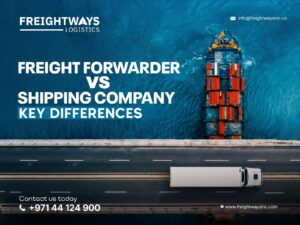
Freight Forwarder vs Shipping Company: Key Differences Every Business Should Know
International shipping is now an essential part of modern business. Whether you import raw materials, export finished goods or manage a global supply chain, the right logistics partner can make a big difference to your costs, delivery times and customer satisfaction.
Many businesses often confuse a freight forwarder with a shipping company. Both are involved in moving cargo from one place to another, but they do very different jobs. Understanding these differences helps businesses make better logistics choices and avoid unnecessary delays or costs.
In this guide, we’ll explain how a freight forwarder differs from a shipping company, explore their responsibilities, and help you determine which solution best fits your business needs.
What Is a Freight Forwarder?
A freight forwarder is a logistics expert who handles and manages the shipment of goods for companies. Freight forwarding companies don’t own ships, trucks or aircraft, but they arrange shipments through a network of trusted transportation partners.
Think of a freight forwarder as your logistics project manager. They handle every stage of the shipping process while ensuring your cargo reaches its destination efficiently and compliantly.
Typical freight forwarding services include:
- Shipment planning
- Carrier selection
- Route optimization
- Cargo booking
- Customs clearance
- Documentation management
- Cargo insurance
- Warehousing
- Door-to-door delivery
- Shipment tracking
Their goal is to simplify international shipping while reducing risks and transportation costs.
What Is a Shipping Company?
A shipping company is the actual carrier responsible for physically transporting cargo.
Unlike a freight forwarder, a shipping company owns or operates transportation assets such as:
- Cargo vessels
- Trucks
- Aircraft
- Rail transportation
- Containers
Their primary responsibility is moving goods from one location to another according to agreed schedules.
Examples include major ocean carriers, airlines, trucking companies, and rail operators.
Freight Forwarder vs Shipping Company: The Main Differences
Although both participate in global logistics, their responsibilities differ significantly.
Freight Forwarder | Shipping Company |
Plans entire shipment | Physically transports cargo |
Coordinates multiple carriers | Operates transportation equipment |
Handles documentation | Focuses on transportation |
Provides customs support | Usually does not manage customs |
Offers end-to-end logistics | Provides transportation only |
Can combine multiple transport modes | Usually specializes in one mode |
A freight forwarder works as your logistics partner, while a shipping company serves as the transportation provider.
Why Businesses Prefer Freight Forwarders
Managing international shipments involves much more than booking cargo space.
Businesses often choose freight forwarding services because they simplify complex shipping requirements.
- One Point of Contact
Instead of communicating with multiple carriers, customs authorities, warehouses, and transport providers, businesses work with a single logistics expert.
This saves valuable time and improves coordination.
- Better Cost Optimization
Experienced freight forwarders compare rates across multiple carriers and transport routes.
They help businesses:
- Reduce shipping costs
- Avoid unnecessary charges
- Consolidate cargo
- Improve container utilization
This often leads to significant long-term savings.
- Customs Clearance Expertise
One of the biggest challenges in international trade is customs documentation.
Freight forwarding professionals assist with:
- Commercial invoices
- Bills of lading
- Certificates of origin
- Import permits
- Export declarations
- Duty calculations
Proper documentation minimizes delays and prevents costly penalties.
- Multi-Modal Shipping
Modern supply chains rarely depend on one transportation method.
A freight forwarder can combine:
- Ocean freight
- Air freight
- Road transport
- Rail transport
This flexibility allows businesses to balance speed and cost based on shipment priorities.
- Risk Management
Unexpected disruptions can occur due to:
- Port congestion
- Weather conditions
- Customs inspections
- Route changes
- Transportation delays
Freight forwarders monitor shipments continuously and quickly identify alternative solutions when challenges arise.
When Should You Choose a Shipping Company?
Working directly with a shipping company may be suitable if:
- You regularly ship full container loads.
- You have an experienced logistics department.
- Your shipping routes rarely change.
- You only require transportation services.
- You already manage customs and documentation internally.
Large organizations with dedicated supply chain teams often negotiate directly with carriers.
When Is a Freight Forwarder the Better Choice?
A freight forwarder becomes especially valuable when businesses need additional logistics support.
Choose freight forwarding services if you:
- Import or export internationally
- Ship to multiple countries
- Need customs clearance assistance
- Require door-to-door logistics
- Have time-sensitive shipments
- Need warehousing solutions
- Want shipment tracking
- Prefer one logistics partner
For growing businesses, this often provides better operational efficiency.
How Freight Forwarders Improve Supply Chain Efficiency
Efficient supply chains rely on coordination.
A freight forwarder improves logistics performance by:
Better Carrier Selection
They identify carriers based on:
- Transit time
- Reliability
- Pricing
- Cargo type
- Destination
Shipment Visibility
Modern freight forwarding services provide shipment tracking, allowing businesses to monitor cargo throughout its journey.
Greater visibility helps businesses plan inventory more effectively.
Reduced Administrative Work
Instead of preparing extensive shipping paperwork independently, businesses rely on logistics specialists who understand international trade regulations.
This reduces administrative workload and minimizes documentation errors.
Common Misconceptions About Freight Forwarders
They Own Ships
No. Most freight forwarders do not own transportation assets. Instead, they coordinate shipments using trusted carrier networks.
They Are More Expensive
Not necessarily. Many freight forwarders negotiate competitive freight rates that businesses may not receive individually.
Combined with customs expertise and reduced shipping errors, they often lower overall logistics costs.
They’re Only for Large Companies
Small and medium-sized businesses often benefit the most.
Freight forwarding services simplify global trade without requiring an in-house logistics department.
How to Choose the Right Freight Forwarder
Not all logistics providers offer the same level of expertise.
When selecting a freight forwarding partner, consider:
- Industry Experience
- Global Network
- Customs Expertise
- Technology
- Customer Support
Why Freight Ways Logistics Is Your Trusted Freight Forwarder
At Freight Ways Logistics, we understand that every shipment has unique requirements.
Our experienced logistics team delivers complete freight forwarding services that simplify international trade while helping businesses reduce costs and improve delivery performance.
Our solutions include:
- Ocean Freight
- Air Freight
- Road Transportation
- Customs Clearance
- Warehousing
- Cargo Consolidation
- Project Logistics
- Door-to-Door Delivery
- Supply Chain Support
Whether you’re shipping locally or globally, our team provides reliable logistics solutions tailored to your business goals.
FAQs
Is a freight forwarder the same as a shipping company?
No. A freight forwarder manages the logistics process and coordinates shipments using multiple carriers, while a shipping company physically transports cargo using its own vessels, trucks, aircraft, or other transportation assets.
Do freight forwarders handle customs clearance?
Yes. Most freight forwarding services include customs documentation, import and export compliance, duty assistance, and customs clearance support.
Is using a freight forwarder more cost-effective?
In many cases, yes. Freight forwarders negotiate competitive carrier rates, optimize shipping routes, consolidate cargo, and help businesses avoid costly shipping mistakes.
Can freight forwarders arrange both air and ocean freight?
Yes. Professional freight forwarding companies coordinate multiple transportation modes, including air freight, ocean freight, road transport, and rail logistics.
What is the difference between a freight forwarder and a shipping company for international shipping?
A freight forwarder manages the entire logistics process, including carrier selection, customs clearance, documentation, warehousing, and shipment coordination. A shipping company physically transports cargo using its own ships, trucks, aircraft, or rail services. Businesses needing complete logistics management typically choose a freight forwarder, while those requiring only transportation may work directly with a shipping company.